A record of how this work is done.
The methodology behind Tarko Journal is not a marketing document. It is a record of the specific practices the editorial team follows when sourcing, writing, and reviewing each article.
Tarko Journal operates under the following editorial principles: articles are reviewed by at least one second editor before publication, sources are cited where appropriate, corrections are noted publicly, and writers disclose any commercial relationships that could influence their selection of subject matter.
Tarko Journal is an independent editorial publication focused on everyday wellness practices. The publication is not affiliated with any commercial, governmental, or institutional body.
The editorial process — step by step.
Pitch & commissioning
Every article begins with a written pitch. Whether sourced from a staff writer or an independent contributor, the pitch must include a working headline, a 100-word angle summary, and at least two reference sources. Pitches are reviewed by the lead editor and either approved, returned for revision, or declined with brief reasoning.
Approved pitches are commissioned with a word count target (typically 1,200–2,000 words), a delivery date, and a list of specific questions the piece must address. The commission brief remains on file throughout the editing process.
Research & source verification
Writers are expected to locate primary sources for all factual claims. Primary sources include published nutritional research, ingredient supplier documentation, independent batch-verification certificates, and manufacturer formulation disclosures. Secondary sources — reporting on research — are acceptable for context but must be clearly distinguished from primary material.
All sources are submitted alongside the draft. The editorial team checks that each source cited supports the specific claim made in the article, and flags any instances where a source's findings are characterised beyond their actual scope.
First draft & editorial review
The first draft is reviewed by the commissioning editor with attention to factual accuracy, source quality, and editorial tone. Tarko Journal uses an evidence-informed approach: writers distinguish between robust published findings, emerging research with limited sample sizes, and traditional use with limited published backing.
These categories are signposted within articles — readers are given the tools to evaluate the weight of evidence behind each claim, rather than receiving a single unqualified assertion.
Second editorial review
Every article published by Tarko Journal goes through a mandatory second editorial pass conducted by a different editor than the one who handled the first review. This second editor checks for internal consistency, overstatement of evidence, and any passages that could be read as advising readers on the management of specific conditions.
The second editor also reviews all image alt text, section headings, and metadata for accuracy and tone consistency before the piece advances to publication queue.
Publication & archiving
Articles are published with a visible publication date and author credit. All source references are retained in the editorial archive. Where a source is publicly accessible online, a link is included. Where a source is a proprietary document (such as a batch-verification certificate), it is noted as "on file" without reproduction.
Published articles are assigned a version number. Substantive edits after publication are reflected in an updated version number displayed on the article page, with a summary of changes at the foot.
Corrections & post-publication review
Reader corrections are acknowledged within two working days. Verified factual errors are corrected in the article text with a dated correction note appended at the end of the piece. Corrections are not silently applied — the editorial team documents every change to ensure the archive accurately reflects the article's revision history.
Articles that cover rapidly evolving areas of nutritional research — such as emerging adaptogen evidence — are scheduled for periodic review. Where significant new findings alter the picture described in a published piece, an update is issued.
How ingredients and formulations are documented.
Ingredient sourcing disclosure
Active ingredients are sourced from documented suppliers, with each batch accompanied by a certificate of composition. Sourcing prioritises suppliers whose facilities maintain food-grade processing standards.
When Tarko Journal articles discuss ingredient origin, writers are required to cite the supplier category (direct-from-farm, broker, extraction specialist) and whether the ingredient has undergone independent analysis. Vague sourcing claims are not acceptable for publication.
Batch-tested quality standards
Content published by Tarko Journal covering specific supplement formulations is selected based on published nutritional research and undergoes independent batch verification review for quality and labelling accuracy.
The publication distinguishes between third-party verified batches (where an independent laboratory has analysed a specific production run) and manufacturer self-reporting. This distinction is made explicit in article copy.
Whole-food sourced materials
For articles covering whole-food sourced ingredient lines, writers document the extraction or processing method used — cold-press, fermentation, drying, or aqueous extraction — and note where this method affects the concentration profile of the finished ingredient. Articles do not make efficacy claims beyond what is supported by the cited research.
Plant-based formulation research
Coverage of plant-based supplement blends requires writers to consult at least two independent sources — one published research reference and one formulation or supplier document. The balance of evidence across sources must support the angle of the article. Single-source formulation articles are not commissioned.

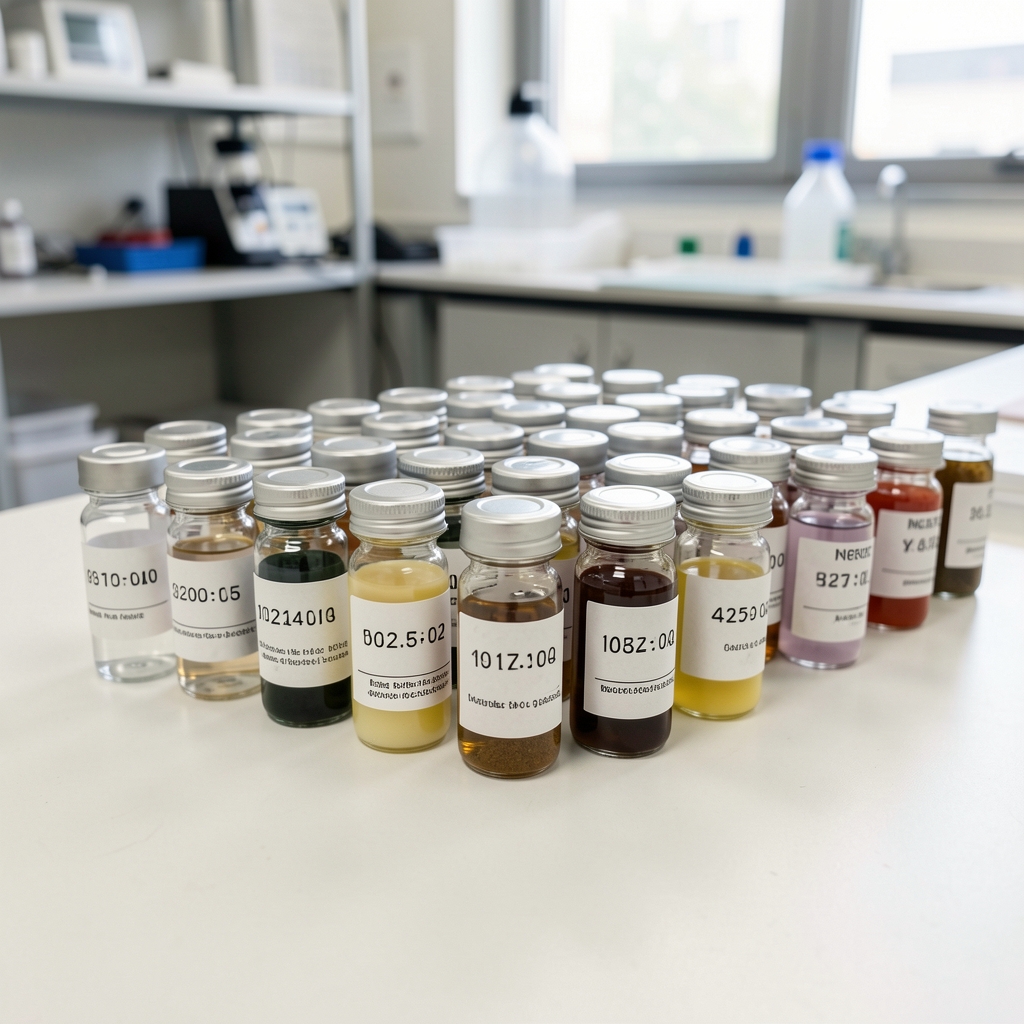
Supplier documentation review — archive ref. 24-C
Independent batch sample arrangement — archive ref. 24-D
Standards applied to specific subject areas.
Adaptogen overview articles
Adaptogens occupy a complex space in nutritional research — some compounds have a substantive body of published research, while others have only traditional use data or early-stage investigation. Tarko Journal articles covering adaptogens explicitly state where a compound sits on this spectrum.
Writers avoid presenting adaptogen research in a way that conflates population-level observations with individual outcome projections. All adaptogen articles are reviewed for scope accuracy before publication.
Mineral complex documentation
Coverage of mineral complexes — zinc, magnesium, selenium, and related compounds — draws on established nutritional reference standards and published absorption research. The specific form of the mineral compound (oxide, citrate, glycinate, bisglycinate) is noted where it affects the documented profile of the ingredient.
Safe role descriptions used in article copy are drawn from established nutritional reference databases. Writers do not extrapolate from these references to make specific outcome projections.
Performance nutrition and active lifestyle
Articles on performance nutrition and energy and stamina practices are reviewed with attention to the distinction between acute and chronic nutritional effects. Writers are required to specify the population studied in cited research and avoid generalising findings to populations with different baselines.
Coverage of protein-rich nutrition and lean body support draws on established reference daily intakes and published sports nutrition research. Articles do not make claims about specific body composition outcomes.
Morning routine and stress management
Lifestyle and routine content is written with an awareness that readers have varying baselines, schedules, and dietary frameworks. Articles in the morning routine and balanced eating habits categories offer documented observations rather than prescriptive structures. The editorial team avoids language that implies a single correct routine exists.
Commercial independence and conflict disclosure.
Tarko Journal accepts no editorial payment from supplement manufacturers, ingredient suppliers, or wellness brands. The publication's revenue comes from display advertising inventory sold through a programmatic network. Advertisers have no influence over editorial content selection, topic framing, or publication decisions.
Writers who have a commercial relationship with a brand or ingredient supplier mentioned in their article must disclose this relationship at the time of pitch submission. Undisclosed conflicts of interest result in removal of the article from the archive and permanent removal of the writer from the contributor pool.
No supplement product is provided to Tarko Journal free of charge in exchange for coverage. Where a writer reviews a product purchased independently, this is stated within the article. Where a product sample was provided voluntarily by a manufacturer without editorial conditions, this is disclosed and the article is reviewed for tone neutrality by a second editor.
The editorial team's conflict disclosures are retained on file and reviewed annually by the lead editor. Any change in a contributing writer's commercial relationships must be reported to the editorial team within fourteen days of the change taking effect.
Methodology questions.
Articles published on Tarko Journal are editorial in nature and reflect the writers' observations on everyday wellness practices. The content is not intended as professional advice, nor as guidance for the management of any specific condition. Readers with specific concerns about their daily routines are encouraged to speak with a qualified wellness professional.