Protein requirements for active men have become one of the more contested topics in everyday nutritional discourse — contested not because the underlying science is unclear, but because the way that science is communicated has been shaped heavily by commercial supplement marketing. This piece attempts a more measured account: what does the nutritional record suggest about daily protein requirements for men in active daily living, how should that requirement be distributed across meals, and where does supplementation fit into a whole-food-first approach?
The Requirement Question
Reference values for protein intake in men vary depending on the institutional body and the activity level being considered. General population reference intakes in most international frameworks sit in the range of 0.8 g per kilogram of body weight per day — a figure that was derived from studies of protein balance in largely sedentary populations and represents a minimum sufficiency, not an optimum for active living.
For men engaged in regular resistance or endurance exercise, the more relevant body of research suggests that 1.4 to 2.0 g per kilogram per day better supports the maintenance of lean body mass and normal muscle protein synthesis. The upper end of this range — around 1.8 to 2.0 g/kg — is typically cited in the context of men engaged in intensive resistance training; men in active jobs or recreational sport often find the lower-middle range adequate.
The question that is less often addressed in supplement marketing is what proportion of this requirement most active men are already meeting through ordinary diet. For a man eating three structured meals daily that include animal protein at two of those meals, the gap between current intake and an activity-adjusted target is often smaller than supplement marketing implies. Understanding one's actual dietary intake — even through a rough three-day estimate — is a more precise starting point than adopting an external recommendation wholesale.
Meal Distribution
The distribution of protein intake across meals is a dimension that receives less attention than total daily amount but has meaningful nutritional implications. Muscle protein synthesis appears to be stimulated by individual meal protein doses above a threshold of approximately 20 to 40 grams of high-quality protein — a threshold that most men in active living can meet from a structured meal without supplementation.
Concentrating a large proportion of daily protein intake into a single meal — as occurs when breakfast is low in protein and dinner is the primary protein meal — appears to be less effective at supporting lean body mass than distributing protein across three or four eating occasions. This finding has practical implications for men whose routine includes a minimal breakfast: adding a moderate protein source to the morning meal, even if small, may contribute more meaningfully to lean body support than evening supplementation.
The post-exercise window is often cited as a period of elevated muscle protein synthetic activity. The research record here is somewhat more nuanced than the marketing version suggests: while there does appear to be a period of heightened responsiveness in the hours following resistance exercise, the total daily protein intake and distribution remain more predictive of lean body outcomes than the precision of the post-exercise protein timing.
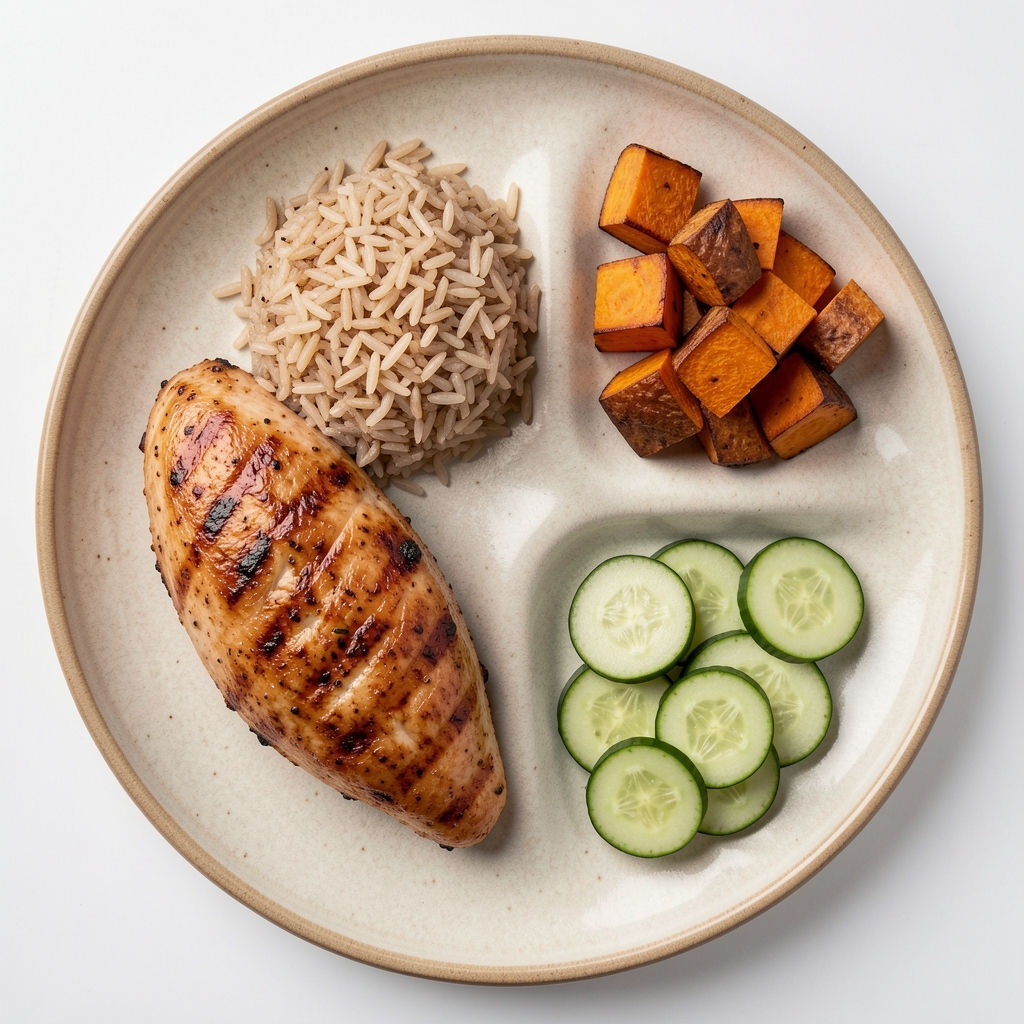
[ Structured meal reference — balanced plate composition ]
Source Variety
Protein source variety is a nutritional consideration that extends beyond the amino acid profile of individual foods. Different protein sources bring different micronutrient contributions: fish brings omega-3 fatty acids and iodine; meat brings iron and B12; legumes bring fibre and a suite of minerals including zinc and magnesium; dairy brings calcium and riboflavin. A diet that draws protein from multiple sources rather than a single dominant source captures these secondary nutritional contributions alongside the primary protein content.
The amino acid completeness of a protein source — its ability to provide all nine essential amino acids in proportions that support human protein synthesis — varies meaningfully across common dietary proteins. Animal sources (fish, poultry, red meat, eggs, dairy) are generally considered complete; most individual plant sources are not, though combinations across a day's eating readily supply a complete amino acid profile. The idea that plant-based eaters must meticulously pair proteins at every meal has largely been revised in contemporary nutritional research — daily variety is the more relevant unit.
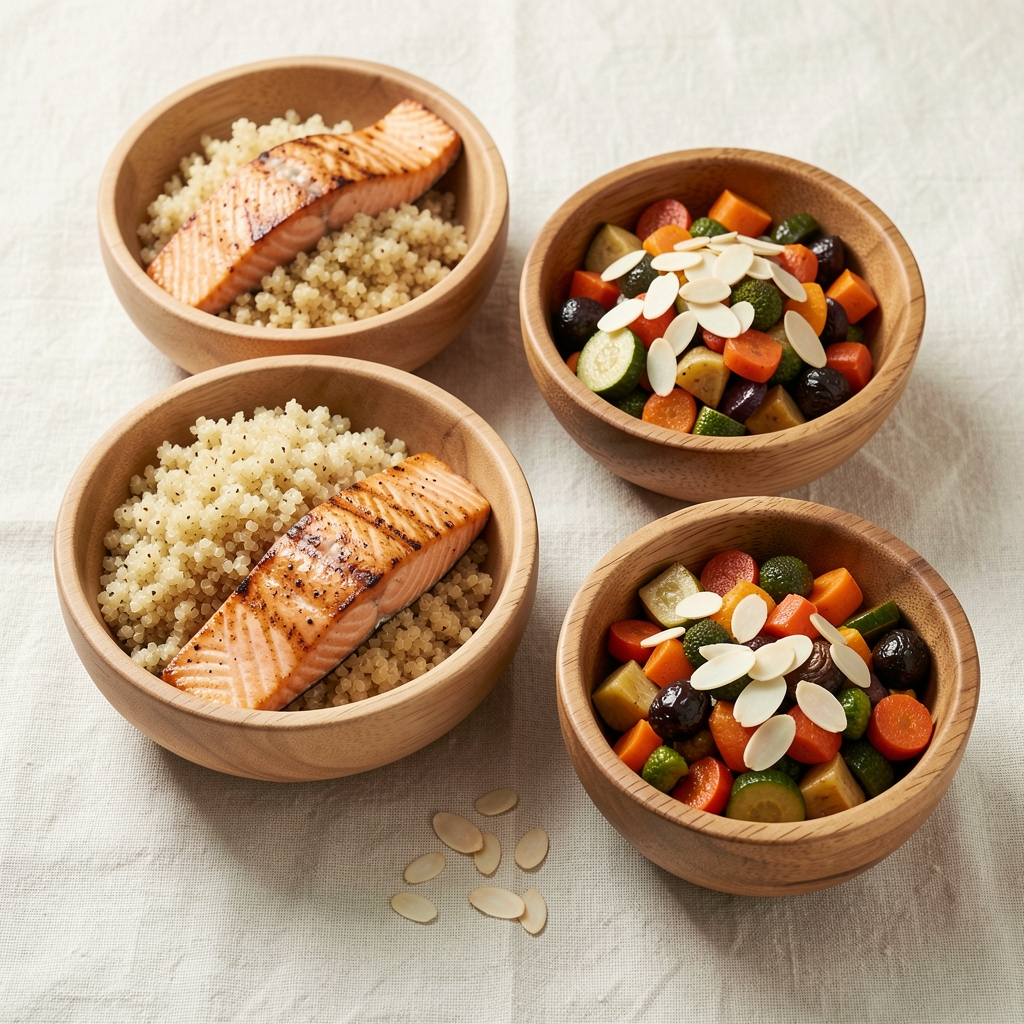
Oily fish — salmon, mackerel, sardines — deserves particular attention as a protein source for active men. Beyond its amino acid contribution, the omega-3 fatty acid content of regularly consumed oily fish is associated in nutritional research with supporting normal heart function and contributing to the maintenance of normal blood triglyceride levels. Two to three servings per week, as most international nutritional frameworks suggest, is a modest and achievable target for most men.
"The gap between current intake and an activity-adjusted target is often smaller than supplement marketing implies. Understanding one's actual dietary intake is the more precise starting point."
— Jasper Pembroke, Tarko Journal
Plant-Based Protein
Men building a primarily plant-based protein intake have a wider range of well-documented options than the mainstream conversation sometimes acknowledges. Tofu and tempeh from fermented soy offer protein densities competitive with many animal sources, with the additional advantage that tempeh's fermentation process supports the bioavailability of its mineral content. Lentils and chickpeas contribute substantial protein per serving alongside meaningful iron and folate contributions.
For men whose daily protein target is toward the higher end of the activity-adjusted range (1.6–2.0 g/kg), achieving this exclusively from whole plant foods requires a degree of meal planning that not all daily routines accommodate easily. This is the legitimate nutritional case for plant-based protein supplementation — not to replace whole-food protein but to close a gap that meal frequency and preparation time make difficult to fill from food alone.
Pea protein isolate has accumulated a growing body of comparative research against whey protein and performs comparably in studies examining lean body support outcomes with resistance exercise. Combined pea-rice protein formulations address the amino acid profile gap of individual plant proteins, producing a supplement product with a complete amino acid contribution. For men choosing plant-based supplementation specifically, the formulation combination matters more than the individual source.
Portion Awareness
Portion awareness in the context of a protein-focused nutritional practice is less about precision measurement and more about developing a calibrated sense of what constitutes a meaningful serving of protein-containing food. A palm-sized portion of fish, poultry, or meat at a meal contributes roughly 20–30 grams of protein, depending on the specific food and preparation. This rough equivalence is useful for assessing whether a meal is making a meaningful contribution to the day's protein total.
The tendency to underestimate protein content from mixed meals and snacks is well documented in nutritional research. Yogurt, cottage cheese, eggs, and nuts each contribute protein in a way that is easy to undercount when mentally tracking daily intake informally. Conversely, the tendency to overestimate the protein contribution of grain-heavy meals — a bowl of rice or bread-heavy lunch — is also common. A realistic assessment of what typical meals deliver, rather than an aspirational account, is the most useful starting point for a man building a structured nutritional approach.
Hydration interacts with protein metabolism in ways that are sometimes noted in the nutritional literature and less often in the supplement conversation. Adequate fluid intake supports the renal handling of increased protein load and contributes to the broader efficiency of nutrient metabolism. For active men increasing protein intake deliberately, attention to fluid intake is a practical accompaniment rather than an afterthought.
Supplement's Role
Protein supplementation for active men is most defensible as a convenience tool rather than a nutritional necessity. For a man who trains early in the morning before a meal is practical, a protein supplement offers a rapid way to initiate the post-exercise nutritional response. For a man whose working day makes a protein-adequate lunch difficult to arrange, a supplement bridges the gap. These are legitimate functional roles, distinct from the marketing framing that positions protein supplements as fundamental to any active man's daily regimen.
Quality indicators for protein supplements follow the same general logic as other supplement categories: ingredient transparency, third-party batch verification, and clear disclosure of the protein source and processing method. Whey protein concentrate and whey protein isolate differ in their lactose and fat content as well as their protein concentration per gram; men with dairy sensitivity who use whey products generally find isolate better tolerated. Plant-based options in pea-rice combinations, as noted above, represent a well-researched alternative.
A final consideration that is often missed in the protein discussion is the overall dietary pattern in which protein intake sits. An active man eating a varied, whole-food-centred diet — with protein distributed across structured meals and supplemented modestly where convenient — is in a more defensible nutritional position than one who focuses narrowly on a high protein target while allowing overall dietary quality to decline. Protein is a meaningful dimension of the active man's plate; it is not the only one.
- → Activity-adjusted protein intake of 1.4–2.0 g/kg/day is more relevant for active men than general population reference values of 0.8 g/kg.
- → Distribution across three to four meals supports lean body outcomes more effectively than concentrating intake at one meal.
- → Source variety captures secondary micronutrient contributions beyond amino acid profile — oily fish, legumes, and dairy each bring distinct nutritional benefits.
- → Protein supplements serve a practical convenience function; whole-food sourcing across the day remains the primary nutritional foundation.
Editorial Notice: Articles published on Tarko Journal are editorial in nature and reflect the writers' observations on everyday wellness practices. The content is not intended as professional advice, nor as guidance for the management of any specific condition. Readers with specific concerns about their daily routines are encouraged to speak with a qualified wellness professional.